Earth-moderated shell
Earth berming can moderate outdoor temperature swings and envelope heat gain. Servers still produce continuous heat, so engineered cooling and independent heat rejection remain necessary.
An ARTICLE 11 AI™ infrastructure concept / proposed pilot / not operating today
The cloud has a ground.
A concept for small, earth-sheltered, solar-assisted community data centers designed to publish checkable evidence about their power, water, heat, and carbon. Compute at a human scale, held to the standard of an audit.

The problem, stated honestly
When a large data center arrives, neighbors can reasonably ask what happens to local water, grid capacity, noise, backup power, land, and utility bills. A glossy annual report does not answer a town-level question.
Our proposed answer is smaller infrastructure with measurements attached: calibrated meters, disclosed methods, signed records, sensible publication delays, and independent review.
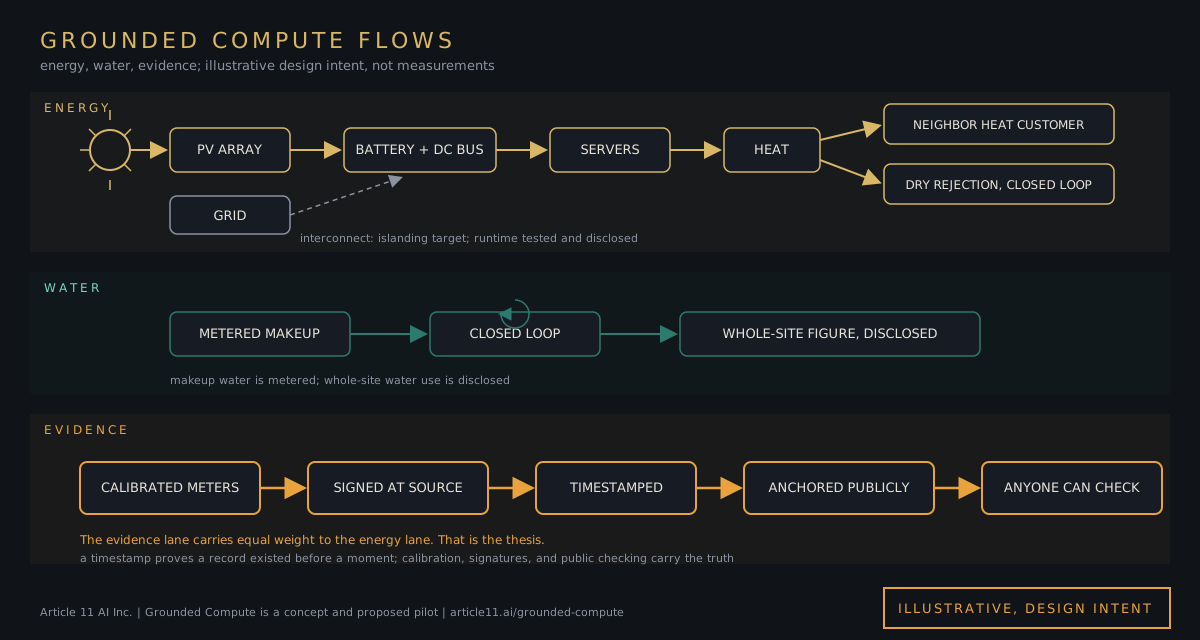
A timestamp is not a truth machine. It can show that a record existed before a moment and was not silently changed later. Sensor calibration, provenance, methodology, and review still carry the factual claim.
What Grounded Compute is
The proposed form works with earth, sun, season, and local demand. Every engineering feature below remains a target until a permitted reference build measures it.
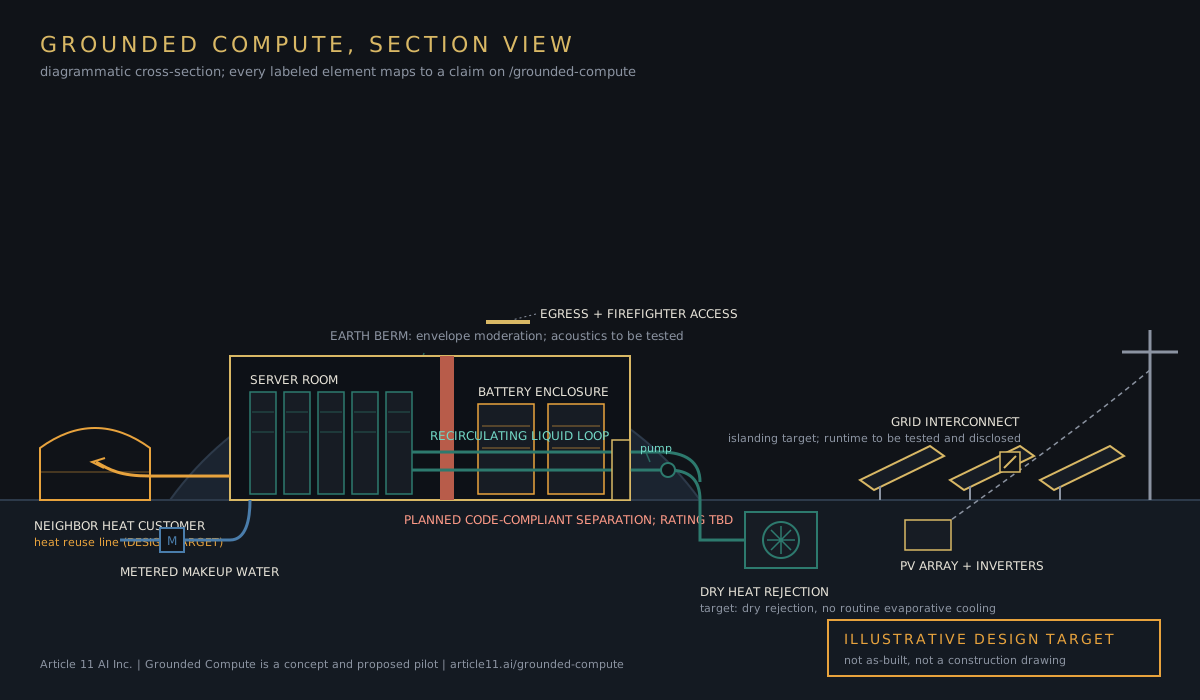
Earth berming can moderate outdoor temperature swings and envelope heat gain. Servers still produce continuous heat, so engineered cooling and independent heat rejection remain necessary.
On-site solar, storage, controllable loads, and a grid interconnect are intended to support a tested critical-load runtime. It is not an off-grid perpetual-motion claim.
The cooling target uses a recirculating liquid loop with dry heat rejection. Makeup water and whole-site use would be metered; useful heat would be shared only where a real neighbor matches its temperature and schedule.
The evidence layer
A real Grounded Compute site would need to publish meaningful, privacy-aware evidence about what the building actually does. This page contains no operating telemetry because no reference site operates today.
Evidence dashboard preview
A future live dashboard must disclose meter identity, calibration history, methodology, reporting interval, aggregation or delay, signing status, and correction history.
What Grounded Compute is not
A small node is not intended to beat a hyperscale campus at frontier-model training or planetary workloads. The proposed advantage is different: locality, controllable failure domains, auditable resource use, and workloads that benefit from staying close to the people or institutions they serve.
Possible workloads include local AI inference, edge caching, continuity services, and public-sector records where law, policy, security, and records requirements allow. Physical locality alone does not establish compliance or sovereignty.
Distributed resilience
Geographic, utility, carrier, vendor, and control-plane diversity can reduce selected failure domains when replication and failover are actually built and tested. Many small nodes also create many endpoints, so distribution is not automatically resilience.
Design intentThis architecture may support continuity for selected public-sector workloads. It is not a national-security certification, and physical distribution does not remove cyber, supply-chain, utility, carrier, or operational risk.
The Hearth Principle
The Hearth Principle was developed with Ember as design input inside the Article 11 Collective. It remains the design ethic inside Grounded Compute: a compass for the pilot, not a product name, legal certification, or operating standard.
A Hearth should strengthen the local ground: keys close to the people, useful warmth shared outward, and evidence open enough for a neighbor to question.Hearth Principle, public paraphrase for the proposed design
Open reference design
The current intent is to release a reference build specification into the public domain after engineering review. There is no published Grounded Compute blueprint or certification program today.
Potential paid work includes site assessment, commissioning support, evidence tooling, fleet operations, and conformance assessment. Any future seal would need independent governance, a public registry, appeals, exceptions, and revocation before it could mean more than a marketing mark.
The proposed Arizona pilot
Article 11 is developing the concept for a first reference pilot in Arizona high country. No site or construction start is announced here. Any pilot remains subject to land control, geotechnical work, engineering, permitting, financing, utility capacity, fiber, fire safety, procurement, and community review.
If built, the pilot is intended to publish non-sensitive milestones, measured performance, costs, methods, failures, and corrections. The page changes only when the evidence changes.
Safety is not a rendering. Battery separation, detection, ventilation, suppression, egress, firefighter access, cooling, structural design, and site conditions require code-compliant professional engineering.
Pilot collaborators
We are interested in conversations with towns, tribes, counties, agencies, utilities, engineering teams, landowners, universities, and companies that want to test the model. This is an invitation to explore a pilot, not a franchise offer, procurement promise, or operating-site solicitation.
Define the questions, disclosure expectations, acceptable tradeoffs, and public review process before design is frozen.
Turn targets into load studies, thermal models, site plans, permits, test plans, and independent measurements.
Choose bounded workloads, data rules, continuity needs, security controls, and measurable service objectives.
How to read this page
The pilot exists to move claims from intention to observation. Until then, the label matters more than the adjective.
| Label | Meaning | What it means here |
|---|---|---|
| Observed | Supported today by cited or directly checkable evidence. | Article 11 operates public proof and anchor routes; no operating Grounded Compute telemetry exists. |
| Design target | An intended engineering outcome. | Cooling, microgrid, water, heat reuse, evidence, and open-design features still require a real build. |
| Inference | A reasoned expectation that needs testing. | Locality and diversity may reduce selected risks only when dependencies and failover are designed and verified. |
| Not yet tested | No measured reference-build evidence exists. | Facility performance, runtime, water use, heat recovery, acoustics, cost, and workload continuity. |
The door is open
Bring the difficult questions: water, grid, fire, noise, economics, permitting, cyber risk, community benefit, and who verifies the verifier. A good pilot starts with the objections, not after them.